Sewer Line Repair in Oakland Park
Sewer line repair in Oakland Park starts with a camera inspection and a surface locate, and the recorded footage is handed to you. We quote in writing, then clear, spot repair, line or replace what the camera named. With 45.6% of the city built before 1970, most of that work is cast iron. We Fix It Right the First Time or It's Free.
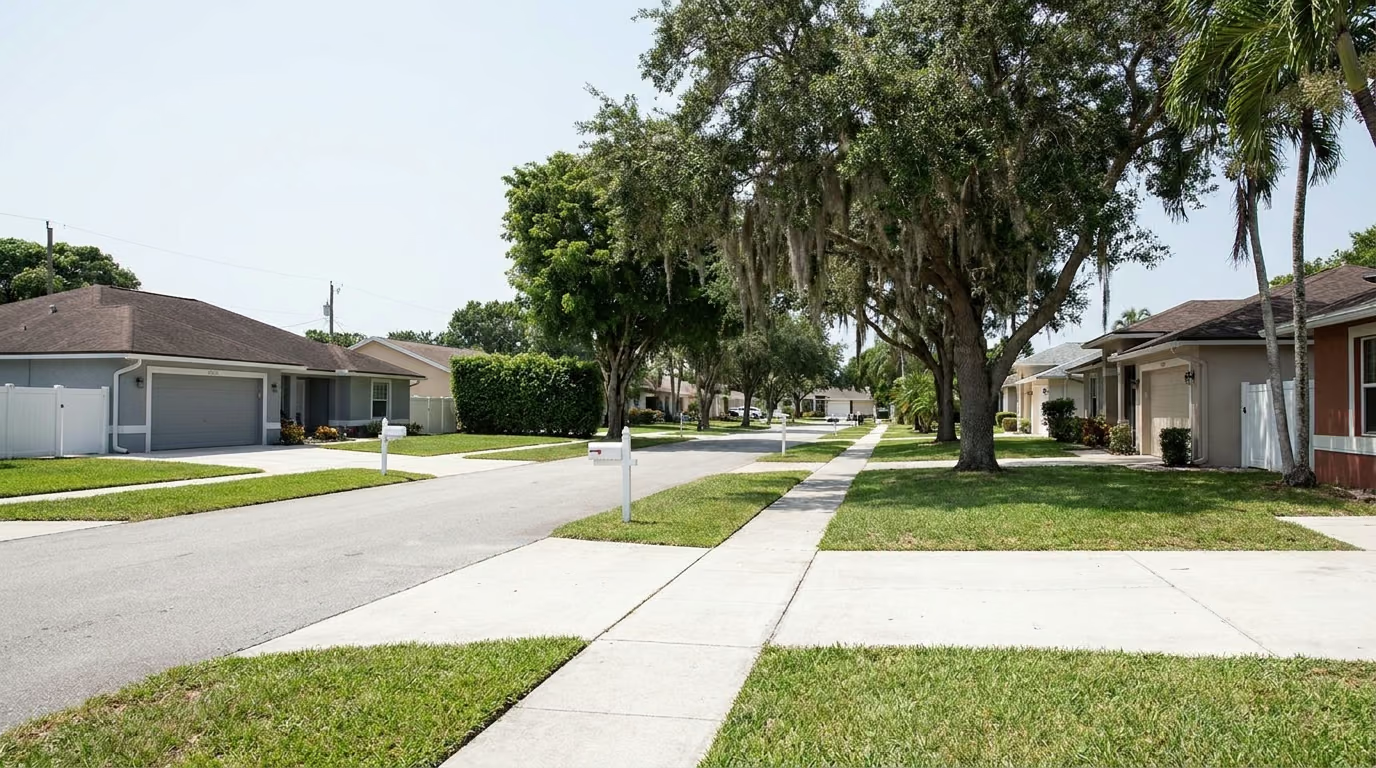
- Coral Heights
- Lloyd Estates
- North Andrews Gardens
- Oakland Park East
- Twin Lakes
- Royal Palm Isles
What does sewer line repair in Oakland Park involve?
Sewer line repair in Oakland Park involves a recorded camera pass before any price is discussed, a surface locate that puts a distance and a depth on every fault, a copy of the recording for the homeowner, and then the least work the recording justifies: a cleaning where a blockage was the whole problem, a spot repair for one crack, a full-length liner where the iron is corroded but still round and on grade, and a replacement where it is not. Nearly half of this city’s houses are from the same cast iron decades, so the recording is what separates a house with a fault from a house with old pipe.
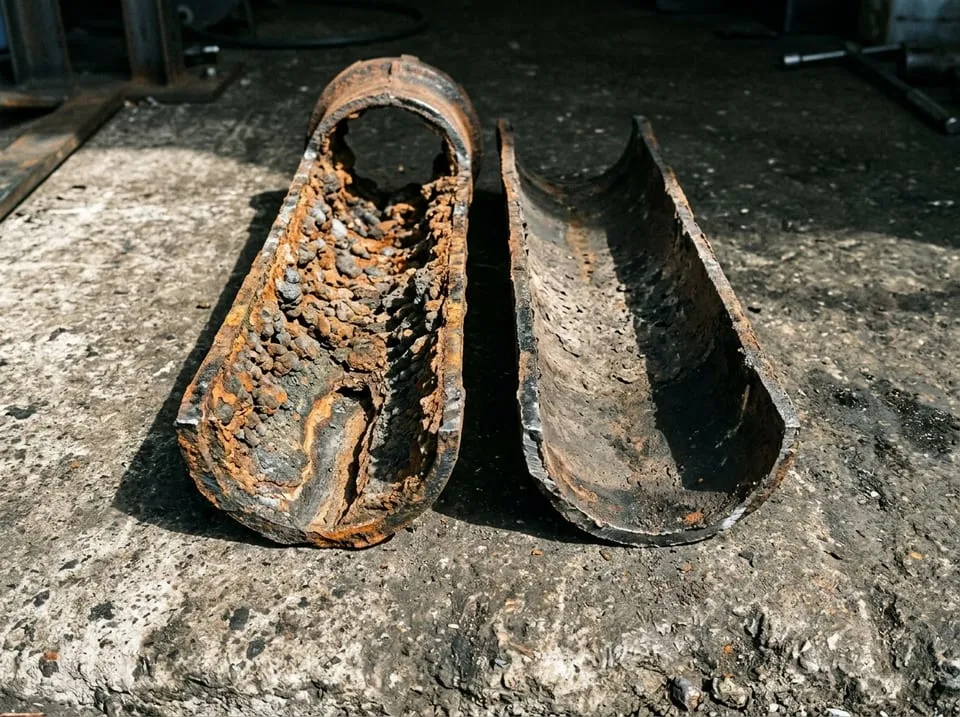
The U.S. Census Bureau’s ACS 2023 5-year tables B25034 and B25035 count 19,193 housing units in Oakland Park with a median year built of 1972, 12,690 of them built before 1980 and 8,748, or 45.6%, built before 1970. That last share is the one that defines sewer work here. It is above Pompano Beach’s share at 37.0% and a point above Fort Lauderdale at 44.6%, and it means that in a city of modest size, close to 8,750 homes were built while cast iron was the default drain material for a Florida house.
Iron was the material because PVC did not become standard in Florida residential construction until the late 1970s, and about 35% of all South Florida living units built through the 1960s and 1970s went in with cast iron drainage. A Coral Heights or Lloyd Estates house from the 1950s or 1960s almost certainly did. The Cast Iron Soil Pipe Institute rates cast iron at 50 to 75 years of service; South Florida practice runs 40 to 50, because the ground under Oakland Park is sandy fill over a high water table that never dries out, and wet sand corrodes the outside of the pipe while sewer gas attacks the crown from inside. Florida’s Building Code names this condition in its clause for filled or unstable ground, which sets the conforming materials for a building sewer as ABS, cast iron, copper or copper-alloy, PVC and PP.
| City | Median year built | Share built before 1970 |
|---|---|---|
| Oakland Park | 1972 | 45.6% |
| Fort Lauderdale | 1972 | 44.6% |
| Pompano Beach | 1974 | 37.0% |
Source: U.S. Census Bureau, ACS 2023 5-Year Estimates, tables B25034 and B25035.
Given all that, the temptation on an Oakland Park street is to quote from the year on the deed. The recording exists to stop that. Every 1960s iron lateral in North Andrews Gardens looks the same on the monitor, dark and rough and scaled, and that appearance is the material at its age rather than a fault. What the pass is looking for is something it can name and place:
- Channeling, where flow has worn the bottom of the pipe into a trough
- A crack, often with soil or groundwater showing at it
- An offset, where one section has dropped against the next
- A belly, read as water that does not drain ahead of the camera
- A root at a joint, which proves the joint has opened
One of those at a painted mark, with a depth beside it, is a reason to repair, and it is priced for that spot and that depth. Scale alone is a reason to set a date to look again. The recording leaves with the homeowner either way, so that a second contractor can read the same wall and reach the same answer.
Should cast iron drain pipes in an Oakland Park house be replaced?
Cast iron drain pipes in an Oakland Park house should be replaced when the recording shows channeling across several sections, a belly or back-pitch, an offset joint, or a collapse; they should be lined when the iron is corroded and scaled but still round and on grade; and they should be left in service with a re-scope date when the camera finds nothing to name. Rust is not on that list. The house’s age puts it in the population that gets scoped; the recording decides what, if anything, gets done.
The way iron fails in this ground rarely produces one clean break. The wall thins along its whole length from the wet sand outside, and then the bottom of the pipe, where the flow runs, goes first, leaving a trough that catches solids continuously. That is channeling, and it is the single finding that most often moves an Oakland Park job from a liner to a replacement, because a liner needs a complete host to cure against. It is also invisible from the fixtures. A channeled line in Twin Lakes drains fine until the day it does not.
| Recording shows | Reasonable response |
|---|---|
| One crack, sound wall on both sides | Spot repair or a sectional liner |
| A root at a joint, pipe round and on grade | Jet, then seal the joint |
| Corroded and scaled, still round and on grade | Full-length liner |
| Channeling across several sections | Replace the run |
| Belly, back-pitch or offset | Replace that section; grade cannot be lined out |
Lining is often the answer here because so many Oakland Park houses have their drains under terrazzo or tile and their laterals under decades of landscaping. A cured-in-place liner is inverted into the old pipe and cured into a new one inside it, leaving the floor and the yard alone. Its limit is the host: the liner takes whatever shape and fall the iron has, including a sag, and cannot cure across the step at an offset or the gap at a collapse. A Royal Palm Isles line with a belly under the pool deck cannot be lined at any price, and a liner quoted before the recording has been reviewed is a quote for work that may not be possible.
Replacement is done one of two ways. Under the slab, the floor is cut along the run, the iron comes out, new pipe goes in on bedding and grade, and the slab is patched. Outside, the lateral is trenched and replaced with PVC DWV to SDR 35, an approved residential sanitary spec under Florida’s Building Code, or burst, with a head pulled through the old pipe from a pit while new pipe follows it. For bursting, the code specifies HDPE, SDR 17, ASTM F714 and requires the finished section to be inspected internally by video camera survey and approved by the code official, so the after-work pass is a legal step rather than a sales one.
The price of any of this is set less by the pipe than by what sits on top of it and how deep it runs. A Coral Heights lateral under a driveway and a hedge, a Royal Palm Isles lateral under a pool deck, and a line that crosses into the public right-of-way, where Broward County requires a Road Cut and Restoration Permit and as-builts sealed by a Florida-registered Professional Land Surveyor, are three different prices for the same defect. Ask for those line items separately and ask for the recording the quote is written against. To get both for an Oakland Park line, request a free quote.
What does a sewer camera inspection actually show in an Oakland Park home?
A sewer camera inspection in an Oakland Park home shows the condition of the iron from the cleanout to the connection, scale and channeling, a belly holding water, an offset joint, a crack, a root at a joint, or groundwater coming in, with each finding placed from the surface at a distance and a depth and the recording handed to the homeowner. On most lines in this city it also shows rust, and rust at this age is what iron looks like rather than a fault.
That distinction is the entire inspection here. A fifty-year-old line in Oakland Park East and a fifty-year-old line in North Andrews Gardens look identical for the first few feet: dark, rough, heavily scaled. One of them may be doing its job and the other may have lost its bottom. A homeowner on the r/askaplumber subreddit wrote this after reviewing his own recording: “Looks like a sag in the line between 15’ and 34’. Or it may be very flat and needs to be flushed and jetted. I didn’t see any cracks, offsets, or roots. Inside of cast iron pipes look like that and replacing due to rust isn’t a typical reason to replace them unless there’s a visible issue on the outside.” That is a homeowner separating background from defect correctly, and it is the standard an Oakland Park quote should meet.
The pass needs a flowing line. A camera pushed into a backed-up pipe sees water. A camera pushed in behind a cable sees the roots or the grease the cable left on the wall, so a fouled line is jetted first if the recording is meant to show pipe. The counter runs from the cleanout so every finding has a footage number, and the locator confirms the depth from the surface.
| Recording shows | What it means |
|---|---|
| Scaled, dark, round and on grade | Expected condition; nothing to repair |
| Channeling along the bottom | A trough that catches solids; cleaning does not correct it |
| Belly or sag | Standing water and settled solids; cannot be lined out |
| Offset joint | A step that catches material and blocks a liner |
| Root at a joint | Proof that the joint has opened |
| Crack or fracture | Groundwater in, sand in, sewage out |
Two things come out of the visit. The recording is the document that lets a second plumber check the first, and in a city where nearly every line is old it is the document that says whether this particular one has a fault. The painted mark converts a repair from a stretch of yard into a point with a depth, and depth is most of the cost, because it decides how much ground has to be opened and whether a trench needs shoring.
If a replacement quote rests on the pipe looking rusty rather than on a located fault, that is the moment to ask for the recording and get a second reading of it. If the mark sits near the street, work in Broward County right-of-way carries permit, restoration and sealed as-built requirements that a joint under a Lloyd Estates lawn does not, and the quote should say which applies. The recording and the mark are the two things a homeowner should refuse to proceed without.
Should I replace my cast iron pipes now, or wait until they actually fail in Oakland Park?
Replacing cast iron before it fails is the right call in Oakland Park when the recording has named an active fault, meaning channeling, a crack, an offset, a belly, or a root at a joint; waiting is defensible when the recording shows scaled but round, correctly graded iron with nothing to name, because scale is the material at fifty years and not evidence of lost wall. The age of a Lloyd Estates house puts it on the list to be scoped. Only the recording moves it from the list to a decision.
The question gets asked plainly by the people who have to answer it. A homeowner on the r/florida subreddit asked: “Is everyone rushing to repair before the plumbing fails or are you adopting a wait and see what happens position.” Another homeowner in the same thread wrote: “I’m not spending $20K unless I have to. I’d wait until there’s an issue.” Both positions are reasonable after a scope. Neither is reasonable before one, because a 1960s line under a Lloyd Estates slab can be sound, channeled, or already taking on groundwater, and nothing visible in the house says which.
What separates the two paths is not only the repair. It is everything around it:
| Planned, after a scope | Emergency, after a backup |
|---|---|
| Scheduled on the homeowner’s calendar | Happens on the day the shower pan fills |
| Quoted by more than one contractor against the same recording | One contractor, one price, no time to compare |
| Method chosen from the recording: liner, section, or run | Method chosen under pressure |
| Floors dry, no remediation line item | Remediation of a finished bathroom added |
Florida adds a consideration that has nothing to do with drains. A homeowner in the same r/florida thread wrote: “insurers in Florida will look for any reason to charge more or drop coverage.” That is a reported experience with carriers examining original plumbing, offered here as what a homeowner reported and not as insurance advice, and it means that for an older Oakland Park house the cost of waiting can arrive as a renewal letter rather than as a puddle.
A decision in this city looks like this:
- A recorded pass of the whole run, from the cleanout to the connection
- A surface locate with the distance and depth of any fault painted on the ground
- A written finding that names the fault or states that there is none
- If there is none, a date to scope again rather than a quote
- If there is one, a quote itemized into access, materials, restoration and permits, and a second bid against the same recording
The first branch is the one homeowners are rarely offered, and in Oakland Park it is common. A line in Coral Heights that is ugly on the monitor and still round and on grade is a line that can wait, with a date attached. That date matters because the ground keeps working on the iron: wet sand thins the wall from outside year after year, and a line that scoped clean does not stay clean indefinitely. Looking again on schedule costs an inspection. Waiting for the slab to announce the failure costs the inspection plus the cleanup, and the slab usually announces it through the lowest shower drain in the house.
The Sewer Line Repair Broward field team puts it this way: “In Oakland Park almost every line we scope is old iron. We write down what we can name and where it is, and if we cannot name anything we write down a date to look again instead of a price.”
Frequently asked questions
Should I replace my cast iron pipes now, or wait until they actually fail?
There is no universal answer, but the two paths are not equal. A planned replacement is scheduled, competitively quoted, and done with dry floors. An emergency one follows a backup and adds remediation. In Florida a third factor applies: carriers examine original plumbing at renewal.
What are the warning signs of a broken sewer line in a Florida home?
Florida homes are slab-on-grade, so the signs differ from basement guidance. Look for a sinking or soft strip in the yard along the line, sewer odor rising through slab joints, drain flies indoors, repeat backups, and a floor area that sounds hollow underfoot.
What does a sewer camera inspection actually show?
It names a defect and locates it. The vocabulary is specific: belly or sag, offset joint, crack, root intrusion, channeling, scale, collapse. A surface locator marks the position and depth on the ground. Rust and scale alone on old cast iron are expected, not a verdict.
Can my sewer line be repaired trenchless, or does it have to be dug up?
Eligibility is decided by the pipe, not the budget. As one plumber put it, you can only do trenchless if the line has correct pitch and is mechanically sound. A bellied, offset or collapsed line cannot be lined. Camera footage settles it before any quote is meaningful.
Should I get more than one quote for a sewer repair?
Yes, on any job over about $5,000. One plumber noted seeing sewer repairs cost $5,000 and $40,000, and one Florida lining job drew quotes of $4,500 and $14,000. Have every bidder quote against the same recorded camera footage so the bids are comparable.
Related services
- Cast Iron Pipe Replacement for South Florida HomesWe replace original cast iron drain lines in Broward County homes with PVC to current Fl…
- How Long Do Cast Iron Pipes Last? Service Life in Florida HomesHow long cast iron pipes last depends on the ground. The Cast Iron Soil Pipe Institute p…
- Cast Iron Pipe Repair: When Repair Beats ReplacementCast iron can be spot-repaired when the defect is isolated and the surrounding pipe stil…
- Sewer Camera Inspection in Broward CountyWe camera-inspect sewer lines for Broward County homeowners: a recorded run from the cle…
- Sewer Line Repair in Lauderhill, FLSewer line repair in Lauderhill starts with a camera inspection and a surface locate, an…