Sewer Line Repair in Pembroke Pines
Sewer line repair in Pembroke Pines starts with a camera inspection and a surface locate, and you keep the recorded footage. We quote in writing, then clear, spot repair, line or replace what the camera named. With a median year built of 1992, most pipe here is PVC and the work is roots and bellies. We Fix It Right the First Time or It's Free.
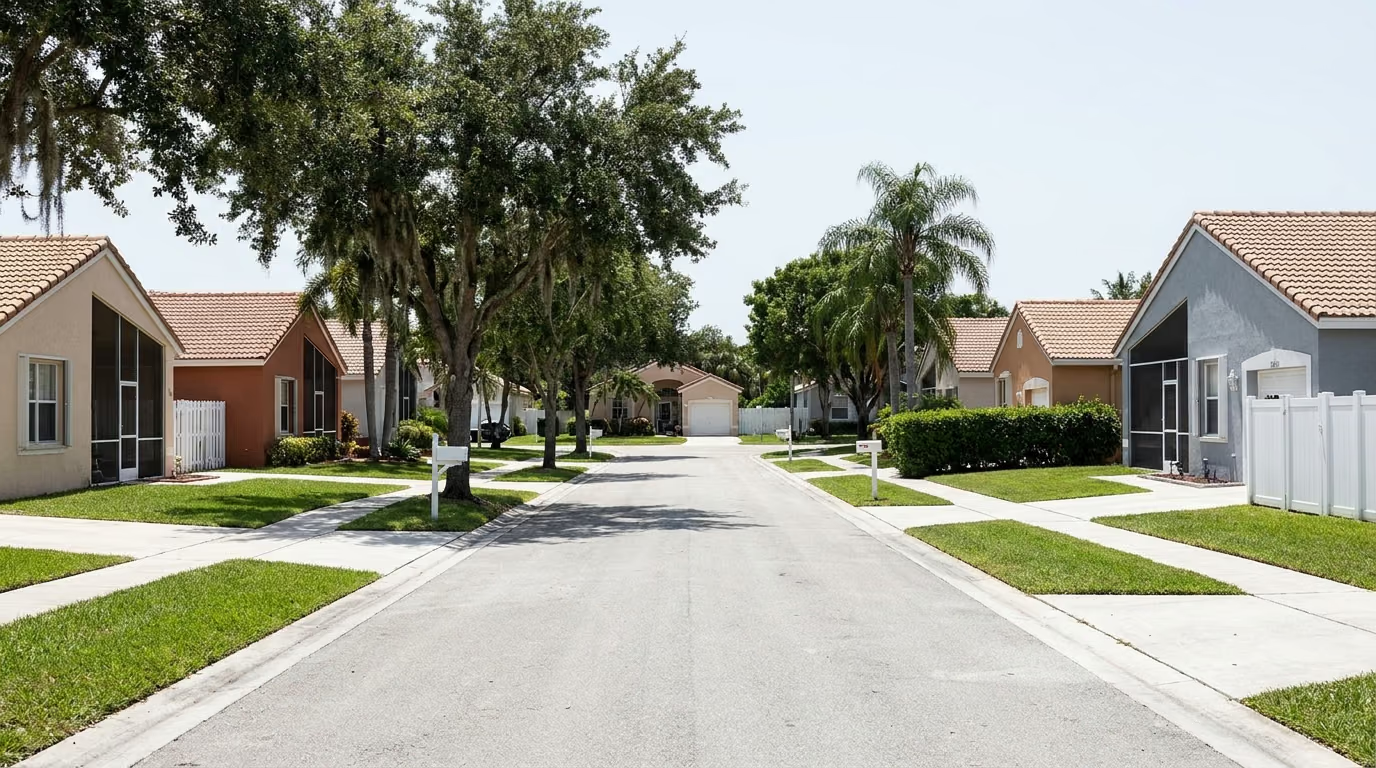
- Pines Village
- Chapel Trail
- Silver Lakes
- Towngate
- Pembroke Falls
- Pembroke Shores
- Century Village
What does sewer line repair in Pembroke Pines involve?
Sewer line repair in Pembroke Pines involves clearing the line if it is blocked, scoping it on camera once it flows, locating any defect from the surface with a distance and depth marked on the ground, handing the recorded footage to the homeowner, and quoting in writing for the narrowest repair the footage supports: a cleaning, a spot repair at one joint, a full-length liner, or a replacement of a settled section. In this city the most common honest outcome is that the line is PVC and sound, and the problem is a single root at one joint or a belly at a known distance.
Pembroke Pines does not have the cast iron problem the rest of this site describes, and it would be dishonest to pretend otherwise. The U.S. Census Bureau’s American Community Survey 2023 5-Year Estimates, tables B25034 and B25035, give the city 66,800 housing units, a median year built of 1992, only 23.1% built before 1980 and 7.0% before 1970. Compare Hollywood at 74.7% pre-1980, or Lighthouse Point’s older stock at 83.5%. Pembroke Pines sits near the bottom of Broward for housing age, because most of it was built after PVC had long since become the standard drain material in Florida construction.
| Broward city | Median year built | % pre-1980 |
|---|---|---|
| Lighthouse Point | 1968 | 83.5 |
| Hollywood | 1969 | 74.7 |
| Fort Lauderdale | 1972 | 66.3 |
| Pembroke Pines | 1992 | 23.1 |
Source: U.S. Census Bureau, ACS 2023 5-Year Estimates, tables B25034 and B25035.
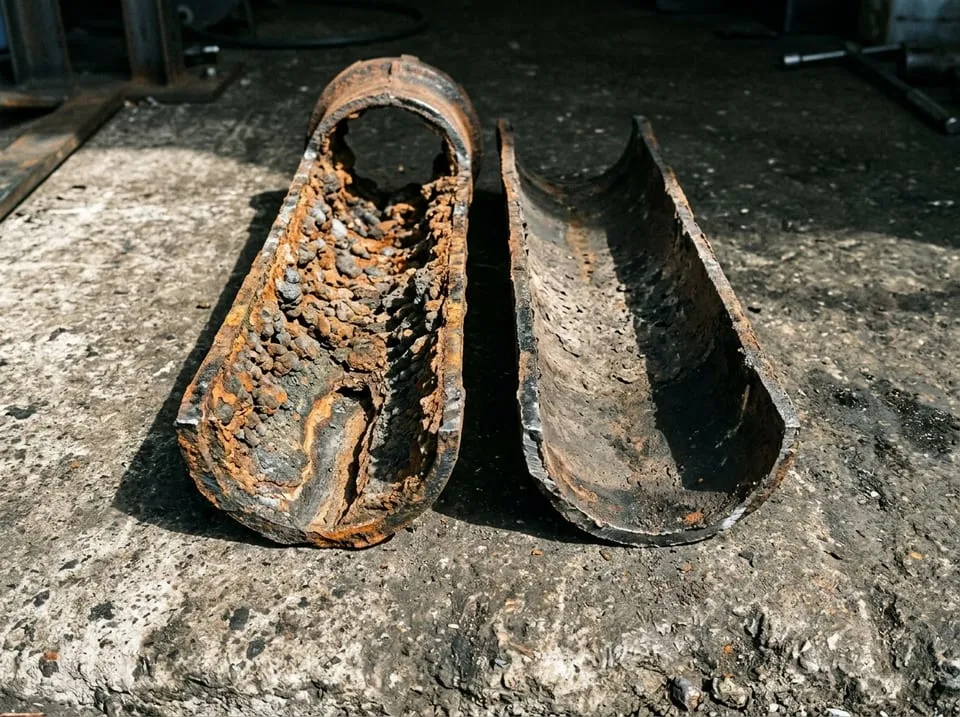
The exception is real and it is small. The eastern sections developed in the 1960s, the older streets around Pines Village and the early neighborhoods nearest Hollywood, belong to the same era as neighboring Hollywood’s stock. That is the 7% of the city built before 1970. If a house sits in that pocket, the cast iron questions apply in full: the Cast Iron Soil Pipe Institute rates the material at 50 to 75 years of service, South Florida practice runs 40 to 50 in damp sandy ground, and the pipe in the photograph above is what a 1960s line can look like inside. The same evidence standard holds there as everywhere: a camera run, a named defect, a marked location.
Anyone quoting a Pembroke Pines homeowner for a cast iron repipe should be asked to show it on camera first. In roughly three quarters of this city, the pipe is not cast iron, and the visit runs the same way whatever the material:
- Cable the line to restore flow if it is backed up, since a camera cannot see through standing water
- Scope the full run and read the material off the monitor before anything else
- Name any defect in plain terms: root intrusion, belly, offset, crack, construction debris
- Locate it from the surface and paint the distance and depth on the lawn or driveway
- Hand over the footage and write the quote against the named defect and its position
On most lines in Chapel Trail or Pembroke Falls the fourth step produces one mark on the lawn, and the quote is for that spot rather than for the house.
What actually fixes tree roots in a Pembroke Pines sewer line for good?
What fixes tree roots in a Pembroke Pines sewer line for good is closing the opening they came in through, because roots cannot penetrate sound pipe: they find a crack or a joint that has failed or separated, follow the moisture in, and grow until the bore is blocked. A cable cuts them and buys a season. A jetter strips the wall more completely. Neither seals the joint, and the roots return until that point is sealed, the section is lined, or the run is replaced.
PVC does not corrode, but it still fails, and the causes have nothing to do with material age. Roots lead the list. Pembroke Pines’ 1980s and 1990s landscaping is now mature, and ficus, live oak and black olive root systems have reached the laterals under the lawns of Silver Lakes and Towngate. A homeowner on a public home-maintenance forum put it exactly: “Definitely roots. They can only get inside from a break in the pipe. The dirt around the break will smell like death.” Finding roots is finding an opening.
The rest of the list is what the camera finds when roots are not the answer:
- Bellies and sags from settlement. Much of the city is built on filled former wetland west of University Drive. Fill compacts unevenly over thirty years, and a settled low section holds standing water permanently. Solids drop out there. Cleaning does not correct a grade defect. This is the single most common finding in newer Pembroke Pines housing.
- Construction debris and poor original installation, which shows up as an offset or a low spot at a known distance and never improves on its own.
- Grease and wipes, the ordinary causes that affect any line.
The sequence that lasts for roots is clear, jet, scope, repair, scope again. A cable opens a hole through a root mass and leaves the rest on the wall, so a camera pushed in straight after a cabling shows roots rather than the joint they came through. Once the wall is clean, the camera finds the entry point, the locator marks it on the surface, and the repair is priced for that spot rather than for the whole run.
| Root finding | Lasting fix |
|---|---|
| Roots at one joint, pipe round and graded | Jet, then seal the joint |
| Roots at several joints, pipe round and graded | Jet, then line the run; the liner closes every joint at once |
| Roots at a separated joint with a low spot | Excavate and re-lay that section on grade |
| Roots plus a belly or offset | Excavate and replace that section; grade cannot be lined out |
Bellies deserve the last word here because they are the Pembroke Pines finding. A liner preserves whatever grade exists, so a belly in Pembroke Shores cannot be lined out at any price. It is an excavation at a known distance to re-lay one section on proper bedding and grade, and it is usually a small job when it is done from a surface mark rather than by digging along the run looking for it. For a Pembroke Pines line cleared, scoped and quoted for the right fix, request a free quote.
Should I buy a Pembroke Pines house that still has cast iron pipes under the slab?
Whether to buy a Pembroke Pines house with cast iron under the slab is a question a sewer camera inspection answers before closing: the camera shows the current state inside the pipe, names any defect and its distance, and produces recorded footage that goes into the negotiation, which is far more useful than speculating about the pipe’s life from the house’s age. On most Pembroke Pines houses the camera confirms PVC and a sound line, which is also worth knowing before the contract is firm.
A homeowner on a public forum, in exactly that situation, wrote: “I want to buy a 1977 built home in Florida. These cast iron pipes are under the slab. Should I run? Candidate for lining?” The best answer in that thread was the right one: get a video inspection to see the current state inside, rather than speculate its life off external appearance. That question has a cheap answer. A sewer camera inspection before closing costs $150 to $400, runs the line, and produces recorded footage naming any defect and its distance. On an older Broward house it can identify a five-figure liability before the contract is firm. On a newer Pembroke Pines house it usually confirms the line is sound.
The inspection is worth ordering on any house in this city, and it is worth ordering with particular care on two kinds:
- A house in the 1960s pocket around Pines Village, where original cast iron is the default assumption and the Cast Iron Soil Pipe Institute’s 50 to 75 year service life, or the 40 to 50 years South Florida practice allows, puts the pipe inside its window
- A house west of University Drive on filled former wetland, where the pipe is PVC and the question is grade: a belly at a known distance is a repair the seller should hear about before closing rather than the buyer after
What the footage shows falls into a short vocabulary, and a buyer should expect to hear it. A homeowner on a public plumbing forum, reading his own pre-purchase footage, wrote: “Looks like a sag in the line between 15’ and 34’. Or it may be very flat and needs to be flushed and jetted. I didn’t see any cracks, offsets, or roots. Inside of cast iron pipes look like that and replacing due to rust isn’t a typical reason to replace them unless there’s a visible issue on the outside.” Rust on a scaled iron line that is round and graded is the expected condition of the material. A named defect at a marked distance is a negotiating point with a number attached.
| Pre-purchase finding | What it means for the deal |
|---|---|
| PVC, sound, correctly graded | No plumbing contingency needed on the sewer |
| PVC with a belly at a known distance | A priced excavation at one spot; ask for it before closing |
| PVC with roots at one joint | A jet and a joint seal; small |
| Iron, scaled, round and graded | No defect; plan a re-scope on a schedule |
| Iron, channeled or offset | A lining or replacement quote; five figures possible |
The footage belongs to the buyer who paid for the inspection, and it is the document that turns “the house is from 1968” into “there is an offset at 34 feet, five feet down.” The first is a worry. The second is a line item in a counteroffer.
Who is responsible for the sewer line, the homeowner or the City of Pembroke Pines?
The City of Pembroke Pines Utilities FAQ states it plainly: “All water and sewer lines from the meter to and within the dwelling are the responsibility of the property owner.” The City maintains water and sewer lines on City property only. That FAQ does not publish a precise demarcation point for the sanitary lateral between a house and the main, and this page will not invent one. For a specific address, call City Utilities Customer Service on 954-518-9000. It is a five-minute call and the only authoritative answer.
That statement settles the private side. Everything from the meter inward, and everything inside the house, is the owner’s: the branches, the main drain under the slab, and the lateral running out under the lawn toward the street. A backup at the lowest fixture in a Towngate house, a root at a joint under the driveway in Silver Lakes, a belly in the run under a Chapel Trail lawn: those are the owner’s to diagnose and repair, and a camera inspection with a surface locate is how the owner finds out which of them it is.
What the statement does not settle is where the owner’s lateral ends and the City’s main begins, because the FAQ answers a leak-check question about the meter rather than a boundary question about the sewer. The honest position is to say so. A contractor who tells a Pembroke Pines homeowner exactly where that line falls, without a document from the City for that address, is guessing. The call to 954-518-9000 replaces the guess.
The practical sequence, when a defect is located near the street:
- Scope the line and mark the defect’s distance and depth on the surface
- Note where the mark falls relative to the sidewalk, the swale and the pavement
- Call City Utilities Customer Service on 954-518-9000 with the address and the marked position
- Confirm in writing who is responsible for that position before anyone digs
- If the work is in public right-of-way, expect Broward County requirements: a Road Cut and Restoration Permit covering the paved area including signage and striping, and as-builts signed and sealed by a Professional Land Surveyor registered in Florida
| Where the defect sits | Who is responsible | What settles it |
|---|---|---|
| Inside the house or under the slab | The property owner | City Utilities FAQ: meter to and within the dwelling |
| Under the lawn, on the private side of the meter | The property owner | City Utilities FAQ |
| Near the street, position uncertain | Confirm before digging | Call 954-518-9000 with the marked position |
| On City property | The City | City maintains lines on City property only |
In Century Village and the rest of the condo stock a third boundary sits in between: the association’s. A unit’s drains join a shared stack and a shared building lateral, and the association’s governing documents draw the line between unit and common element. Read those before commissioning work, ask whether other units in the same stack have the same symptom, and get the association’s plumber’s findings in writing if they have already attended. A repair paid for on the wrong side of any of these boundaries is paid for twice.
Who is the best plumber in Pembroke Pines, Florida?
The best plumber for a sewer line problem in Pembroke Pines is the one who runs a camera before quoting, hands the homeowner the recorded footage, marks the defect’s distance and depth on the ground, writes the quote against that named defect rather than against the symptom or the house’s age, itemizes it into access, materials, restoration and permits, and stands behind the work with a guarantee stated in plain words. Those are criteria rather than a name, and any contractor can be held to them.
The reason to hold them to it is the objection homeowners raise most. After a sewer inspection nearly sank a sale, one homeowner on a public forum put it bluntly: “You need a contractor that ‘scopes’ only - and is NOT part of a plumbing company. That way you will know if it’s legit and not a ruse to get a huge job. Beware any contractor bidders who are on commission- and do not hesitate to ask.” The footage answers that objection. A homeowner who holds the recording can show it to a second contractor, and a diagnosis that survives a second read is a diagnosis. One that does not was a sales call.
What to ask before hiring anyone in Pembroke Pines:
- Will you camera the line before quoting, and do I keep the recording
- Will you mark the defect on the ground with a distance and a depth
- Is the quote written against a named defect at that position
- Is it itemized, so the restoration line is visible
- What is the method, and what finding on the footage justifies it
- What happens if the repair does not hold
Our answers, in order: yes, yes, yes, yes, the footage decides, and We Fix It Right the First Time or It’s Free. If the section we repaired fails again from the same defect, we come back and redo the work at no charge.
| Criterion | What it rules out |
|---|---|
| Camera before quote | Replacement priced on the house’s age |
| Footage handed over | A diagnosis no one else can check |
| Surface mark with depth | A trench dug along the run looking for the fault |
| Itemized quote | A price with the restoration hidden inside it |
| Method tied to a finding | A liner sold on a bellied pipe |
| Written guarantee | A repair that is only as good as the invoice |
In a city this young, the most common honest outcome of that process is that the line is fine and the problem is a single root at one joint or a belly at a known distance. A plumber who tells a Pembroke Pines homeowner that, and prices only that, has passed the test that matters.
The Sewer Line Repair Broward field team puts it this way: “Most of Pembroke Pines is PVC. We scope it, and more often than not we tell the homeowner the pipe is sound.”
Frequently asked questions
Should I replace my cast iron pipes now, or wait until they actually fail?
There is no universal answer, but the two paths are not equal. A planned replacement is scheduled, competitively quoted, and done with dry floors. An emergency one follows a backup and adds remediation. In Florida a third factor applies: carriers examine original plumbing at renewal.
What are the warning signs of a broken sewer line in a Florida home?
Florida homes are slab-on-grade, so the signs differ from basement guidance. Look for a sinking or soft strip in the yard along the line, sewer odor rising through slab joints, drain flies indoors, repeat backups, and a floor area that sounds hollow underfoot.
Who is responsible for the sewer line, the homeowner or the City of Pembroke Pines?
The City of Pembroke Pines Utilities FAQ states that all water and sewer lines from the meter to and within the dwelling are the responsibility of the property owner, and that the City maintains lines on City property only. For a specific address, call City Utilities on 954-518-9000.
Can my sewer line be repaired trenchless, or does it have to be dug up?
Eligibility is decided by the pipe, not the budget. As one plumber put it, you can only do trenchless if the line has correct pitch and is mechanically sound. A bellied, offset or collapsed line cannot be lined. Camera footage settles it before any quote is meaningful.
Should I get more than one quote for a sewer repair?
Yes, on any job over about $5,000. One plumber noted seeing sewer repairs cost $5,000 and $40,000, and one Florida lining job drew quotes of $4,500 and $14,000. Have every bidder quote against the same recorded camera footage so the bids are comparable.
Related services
- Who Owns the Sewer Line From the House to the Street?For the sewer line running from the house toward the street, the City of Pembroke Pines…
- Tree Roots in a Sewer Line: Why They Get In and What Stops ThemTree roots cannot penetrate sound sewer pipe. They enter through a crack, a failed joint…
- Sewer Camera Inspection in Broward CountyWe camera-inspect sewer lines for Broward County homeowners: a recorded run from the cle…
- Main Sewer Line Clog: How to Confirm It and What to DoA clog in the main sewer line affects more than one fixture and backs up at the lowest d…
- Sewer Line Repair in Hallandale Beach, FLSewer line repair in Hallandale Beach starts with a camera inspection and a surface loca…