Main Sewer Line Clog: How to Confirm It and What to Do
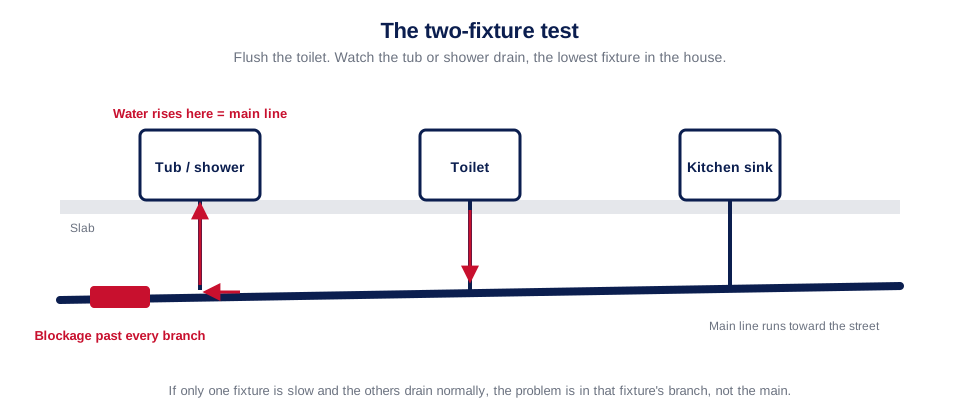
A clog in the main sewer line affects more than one fixture and backs up at the lowest drain in the house. If flushing a toilet makes a shower or tub gurgle or fill, the blockage is downstream of both fixtures, which means it is in the main line rather than in either drain.
How do I know if my main sewer line is clogged?
A main sewer line is clogged when two fixtures start interacting: flushing a toilet makes a tub or shower gurgle or rise, or running the washing machine pushes water up into a floor drain or a bathtub. A single blocked sink drains slowly and nothing else in the house changes, because the obstruction sits in that fixture’s own trap or branch. A blocked main line makes fixtures respond to each other, because every drain in the house shares the pipe downstream of the blockage. When water from a flush has nowhere to go, it comes up at the nearest lower opening, and the only pipe a toilet and a shower have in common is the main. The test takes about a minute and costs nothing: run one fixture and watch a different, lower one.
| What you see | Where the blockage is |
|---|---|
| One sink slow, nothing else affected | That fixture’s trap or branch |
| Flush the toilet, the tub or shower gurgles or rises | Main line, downstream of both |
| Run the washing machine, the tub or floor drain backs up | Main line (a washer discharges a large volume fast) |
| Every fixture slow, lowest drain backs up first | Main line, likely well downstream |
| Toilet bubbles and the water level drops on its own | Venting or main line partially blocked |
Gravity decides where the evidence shows up. Waste backs out at the lowest opening below the blockage, which in a Florida slab home means a first-floor shower pan, a tub, or a laundry floor drain rather than the toilet that caused it. There is no basement floor drain here to absorb it, so the overflow point tends to be a finished room.
The washing machine is the fixture most likely to find the problem first. It discharges roughly 15 to 30 gallons through a pump in under a minute, far faster than a sink, a shower, or a toilet delivers water into the same pipe. A line with a partial restriction can pass a shower’s flow and fail on a washer’s, which is why the first sign of a main line clog in many Broward houses is a tub filling on wash day.
Run the test in this order and write down what happens:
- Fill the tub a few inches and let it drain on its own. Time it.
- Flush the nearest toilet and watch the tub drain and the shower pan.
- Run a full washing machine drain cycle and watch every low fixture in the house.
- Note the order in which fixtures react and how far back from the street they sit.
If only one fixture ever misbehaves, the problem is local and small. If two fixtures interact, stop running water and treat it as a main line clog. In the homeowner threads collected for this site, the multi-fixture signature drew the highest engagement of any symptom: an r/askaplumber thread titled “Why does my toilet gurgle?” ran to 195 comments, and an r/DIY thread on every drain in the house being slow ran to 543.
Why is every drain in my house slow?
Every drain in a house runs slow at the same time when the restriction sits in the main sewer line, past the point where the branches join, and the usual causes in Broward County are tree roots, scale and channeling in original cast iron, a belly holding standing water, hardened grease, and wipes snagged on any of those. A whole-house slowdown is a main line problem by definition, since no single fixture’s trap or branch can affect the others. The distinction that matters is between a clog, which is material in the pipe, and a defect, which is the pipe itself.
- Tree roots entering through cracks and joints, then catching solids and building a mat. Roots are the most common cause in older Broward neighborhoods with mature ficus, oak and palm, and “tree roots” is the most frequent single symptom term in the homeowner discussion collected for this site, at 161 mentions.
- Scale and channeling in cast iron. A fifty-year-old line with a corroded, rough bore catches material that a smooth pipe would carry away.
- A belly or sag holding standing water, so solids settle out at the low point instead of moving through.
- Grease cooled and hardened along the pipe wall, narrowing the bore over months.
- Wipes and non-flushables, which do not break down and snag on anything already there.
- An offset joint or partial collapse, where the pipe itself has moved.
The material and the age of the house set the odds. The Cast Iron Soil Pipe Institute puts cast iron drain pipe at 50 to 75 years of service, and in South Florida’s wet sandy fill the practical figure runs nearer 40 to 50 years, according to bioresponsecorp.com. PVC became standard in Florida construction in the late 1970s, so a house built before about 1975 in Fort Lauderdale (median year built 1972, per U.S. Census ACS 2024 five-year data, table B25034) or Hollywood (median 1969) is very likely draining through original cast iron with a bore that has been roughening for half a century.
Roots, scale, bellies, offsets and collapses are all pipe problems that produce clogs. Clearing the clog restores flow and leaves the cause in place, which is why a line that blocks twice in a year is a repair problem rather than a cleaning problem. Grease and wipes, by contrast, are genuinely a clog: clear them and a sound pipe stays clear.
Two habits tell the two apart from the homeowner’s side. The first is frequency. A line cleared once and quiet for years was blocked by something that passed through it; a line that slows again within months has a feature catching material every day. The second is the season. Root growth in South Florida accelerates in the wet season, so a line that slows every summer and clears every winter is almost certainly a root line, and roots only enter where the pipe is already open.
What can I pour down the tub drain to unclog it?
Nothing poured down a tub drain will clear a main sewer line clog, because the obstruction sits far downstream of the tub, past the point where the toilet, the washer and the kitchen all join it, and a chemical or a pot of boiling water is diluted and cooled long before it arrives. Caustic drain openers also collect in a belly or behind a root mat, where they sit in the pipe until a plumber’s cable brings them back up. A main line clog is cleared mechanically, by cabling or hydro jetting through the cleanout, and the right method depends on what is in the line.
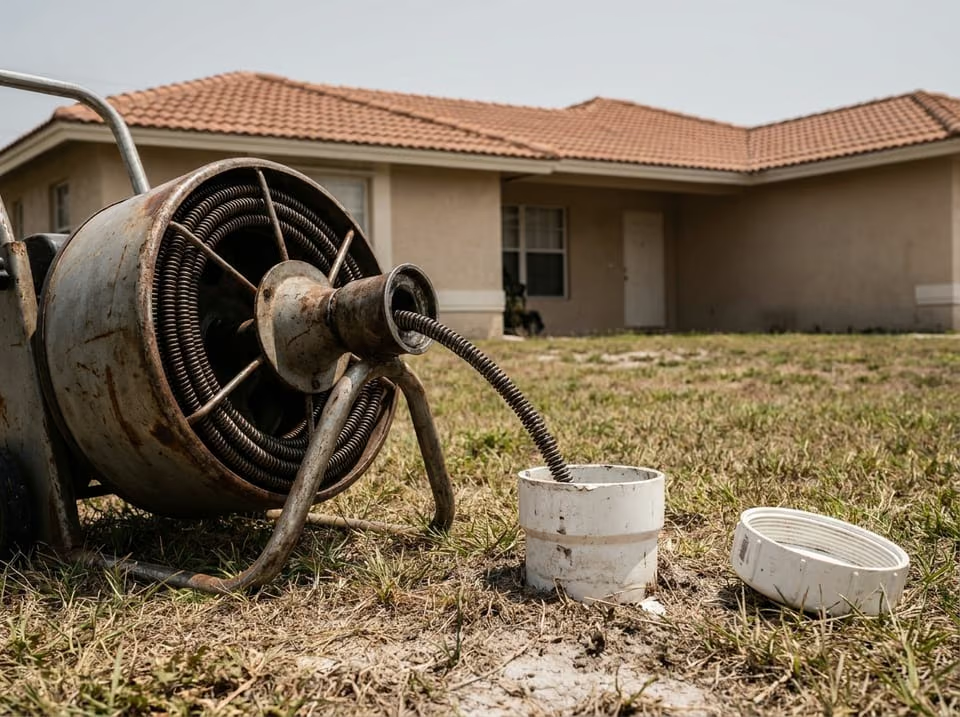
Cabling, a rotating auger on a drum machine, punches a hole through the blockage and pulls back some of it. It is fast, it is cheap, and on roots it removes the mat without removing the roots.
Hydro jetting uses water at high pressure through a nozzle that scours the full bore, and it is the option that actually cleans a pipe rather than perforating the obstruction. On scaled cast iron and heavy root mass it is the difference between flow restored for a month and flow restored properly.
| Method | Typical cost | What it leaves behind |
|---|---|---|
| Cable or auger | $200–$450 | The cause, and usually most of the mat |
| Hydro jetting | $400–$900 | A cleaned bore; the defect that caused it |
| Camera inspection after clearing | $150–$400 | A recorded reason it happened |
Those are ranges reported across South Florida work and homeowner accounts, not a price list. What changes the number is access. A house with an exterior cleanout is cabled from the yard in an hour. A house with no cleanout, common in pre-1970 Broward construction, is accessed through a pulled toilet or a roof vent, both of which add time, and on those houses installing a cleanout is usually recommended because it makes every future call cheaper.
The camera run belongs after the line is clear, not before. A camera cannot see past standing water and debris, so scoping a blocked line produces footage of the blockage and nothing else. The order is clear, then scope, then decide. Skipping the scope is how a homeowner ends up paying for the same cable job every spring.
While waiting for the line to be cleared:
- Stop running water. Each flush and each load adds volume to a pipe that cannot take it.
- Do not add chemicals to standing water in a tub or shower pan; a plumber has to work in it.
- Find the cleanout, usually a capped white PVC stub in the front yard or against the house wall, and clear anything stacked on it.
- Note which fixtures reacted and in what order; that is the diagnosis the crew will confirm.
Why is my drain slow but not clogged?
A drain that is slow but never fully clogged is usually running through a pipe with a defect rather than an obstruction: a belly holding standing water, an offset joint, a channeled section of cast iron, or roots at a joint, each of which narrows the bore permanently without ever closing it. Cabling a line like this restores full flow for a while because it removes what the defect has caught, and the slowness returns as the defect catches more. The clue is the pattern: a genuine clog is cleared once and stays cleared, while a defect produces a slow drain that comes back on a schedule.
Roots are the clearest example, because of what they prove. A commenter on a root thread, in a reply with 305 upvotes that changes the framing entirely, wrote: “Definitely roots. They can only get inside from a break in the pipe.”
If a camera run finds roots, it has also found an opening: a cracked joint, a failed gasket, a corroded section. Removing the roots and stopping there means removing the symptom of a defect that will refill in a season or two. That is the honest reason a root job comes with a repair conversation attached, and also the reason to ask for footage: a root mat visible on video is evidence, and a claim of one is not.
A belly is the second common case. A section of pipe that has settled below grade holds water permanently, solids drop out at the low point, and no amount of cleaning changes the grade. A plumber on a public forum, reading footage of an older line, wrote what a fair report sounds like: “Looks like a sag in the line between 15’ and 34’. Or it may be very flat and needs to be flushed and jetted. I didn’t see any cracks, offsets, or root intrusion.” That report names a distance, offers an alternative, and lists what was ruled out, which is the standard a homeowner should hold any camera report to.
Channeled cast iron is the third. When the bottom of the pipe has corroded away into a trough, the line still drains but the rough exposed edge catches paper and lint on every pass. Rust and scale alone on fifty-year-old cast iron are the expected condition of the material and are not a verdict on it; channeling, a crack, an offset or a belly are specific, locatable defects and are.
Repeat blockages, more than one fixture affected, and a house built before about 1975 with original cast iron together make a strong case for scoping the line rather than clearing it again. The scope costs $150 to $400 and produces a recording that names the defect, its distance from the cleanout and its depth, which is what a repair can be quoted against and what a second contractor can check.
The Sewer Line Repair Broward field team puts it this way: “We clear it first, then camera it, then tell the homeowner whether it will come back. Cabling a root line every spring is a subscription nobody agreed to.”
If your line has blocked more than once, request a free quote and we will confirm what a clear-and-scope covers.
Frequently asked questions
Why does my bathtub back up when I wash clothes?
A washing machine pumps 15 to 30 gallons through in under a minute, faster than any other fixture. That volume overwhelms a partly blocked line. Because the tub and the washer only share pipe downstream, water appearing in the tub places the blockage in the main line.
Should I call a plumber for a gurgling toilet?
If only that toilet gurgles when flushed, the problem is local and small. If a shower, tub or floor drain reacts when the toilet is flushed, two fixtures are interacting and the restriction is in the main line. That case is worth clearing before it backs up.
How do I know if my main drain line is clogged?
Run one fixture and watch a different, lower one. If flushing a toilet makes a tub or shower gurgle or rise, or the washing machine sends water up a floor drain, the restriction sits in the pipe both fixtures share, which is the main line. A single slow sink with nothing else affected is that fixture's own trap or branch.
What actually fixes tree roots in a sewer line for good?
Only repairing the opening they came through. Roots cannot penetrate sound pipe, so finding roots means finding an existing crack or failed joint. Jetting and cutting remove the mass; lining the run or replacing the section removes the entry point. Clearing alone is a delay.
Related services
- Is a Gurgling Toilet Dangerous? What the Sound Actually MeansA gurgling toilet is not dangerous in itself. The sound is air being pulled through the…
- Washing Machine Drain Backup: Why the Tub Fills When You Do LaundryA washing machine drain backup happens because the washer pumps out a large volume fast,…
- Tree Roots in a Sewer Line: What Gets Them Out and Keeps Them OutTree roots cannot penetrate sound sewer pipe. They enter through a crack, a failed joint…
- Broken Sewer Line: The Signs, and What They Look Like in FloridaA broken sewer line shows itself through repeat backups, a persistent sewer smell at flo…
- Emergency Sewer Repair in Broward CountyWe handle active sewer backups in Broward County homes: the line is opened first by cabl…