Is a Gurgling Toilet Dangerous?
A gurgling toilet is not dangerous in itself. The sound is air being pulled through the trap seal because a drain or vent is restricted, and the risk is what causes it: a partial main line blockage that will progress to a backup, or a vent problem that lets sewer gas into the room.
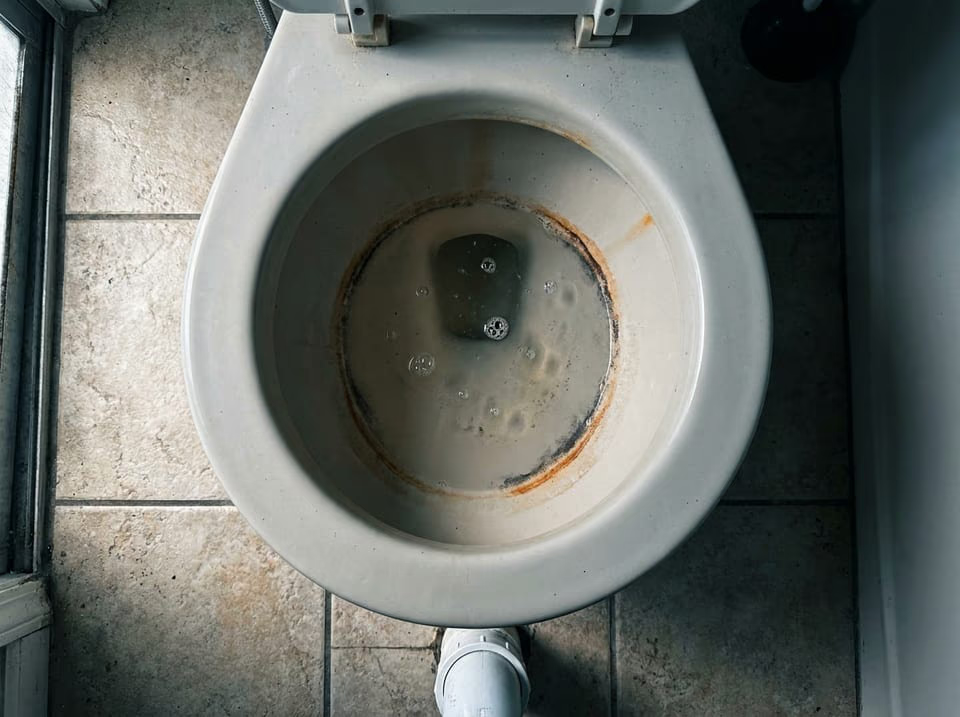
Why is my toilet gurgling even though it’s not clogged?
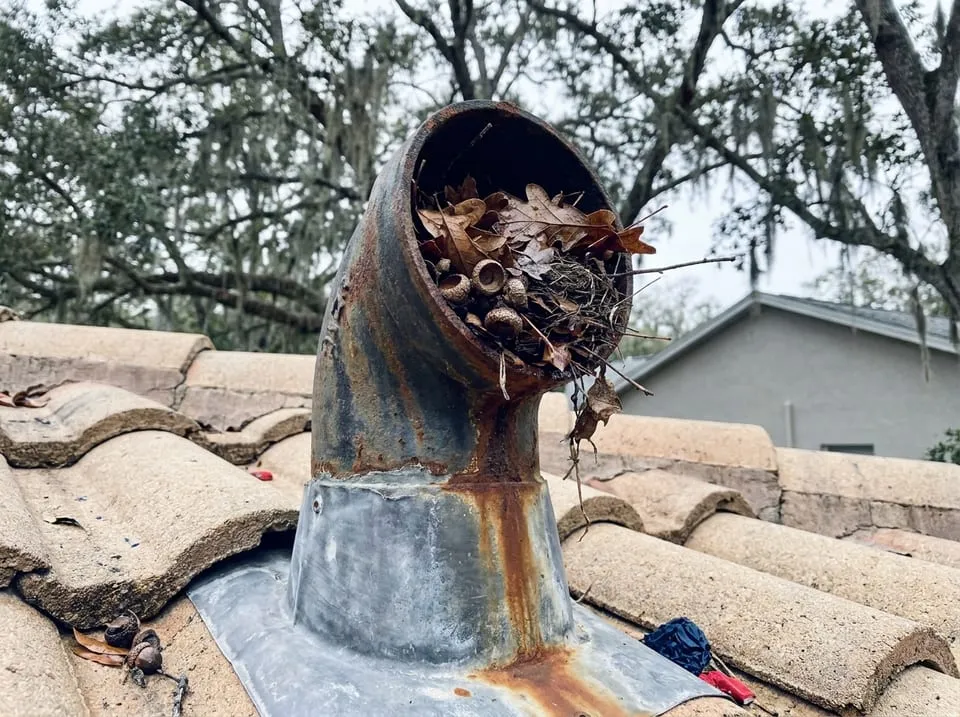
A toilet gurgles even though it is not clogged because air is being pulled through the water in its trap, and that happens when the drain downstream of the toilet is partly restricted or the vent stack on the roof is blocked. The sound itself is harmless. In a correctly working system, air enters and leaves through the vent, and water moves down the drain without disturbing the trap seal. Gurgling means air is taking a different route: because the vent is blocked, or because a restriction further down the line is forcing air back up through the fixture. The toilet is rarely the problem. It is the fixture with the largest trap and the loudest voice, so it reports a problem that sits somewhere else in the system.
| What you observe | Likely cause | Urgency |
|---|---|---|
| Toilet gurgles when you flush it, nothing else affected | Partial blockage in that branch, or a vent restriction | Low |
| Toilet gurgles when the shower or tub runs | Blockage downstream of both (main line) | Act now |
| Shower gurgles when the toilet is flushed | Same, from the other direction | Act now |
| Toilet bubbles and the bowl water level drops on its own | Vent blocked, or main line partially blocked | Act now |
| Gurgling plus a sewer smell | Trap seal is being broken; gas is entering the room | Act now |
| Gurgling across several fixtures at once | Main line or main vent | Act now |
The single most useful distinction is whether one fixture is involved or two. A fixture that gurgles only when a different fixture runs proves the restriction is downstream of both, which places it in the main line rather than in either drain.
A dropping bowl level is the observation homeowners most often miss. A toilet’s bowl water is set by the trap; if the level falls on its own between flushes, something is siphoning water out of the trap, and that is either a blocked vent creating suction as other fixtures drain, or a main line restriction letting pressure swing back and forth. Either way, a trap that has been siphoned down is a trap that is no longer sealing the room from the sewer, which is why gurgling and a smell tend to arrive together.
The vent case and the main line case sound the same at the toilet and are told apart by what else happens. A blocked vent produces gurgling across the house whenever any fixture drains, with no slow drains and no backup. A main line restriction produces gurgling that gets worse over weeks, with the lowest fixtures in the house slowing first. In the homeowner threads collected for this site, an r/askaplumber post titled “Why does my toilet gurgle?” drew 195 comments and an r/Plumbing post about a toilet bubbling while an upstairs shower ran drew 160, which is more engagement than any other single symptom, and the answers in both converge on the same test: run one fixture and watch another.
That test costs nothing and takes five minutes. Fill the tub, pull the stopper, and stand at the toilet listening while the tub drains; then flush the toilet and watch the shower or tub drain. A gurgle in either direction places the restriction in the shared line below both fixtures, and that is the point at which a camera inspection earns its fee, because the camera can then name the defect and its distance from the cleanout instead of guessing at either.
Why does my shower drain make a gurgling sound when I flush the toilet?
A shower drain gurgles when the toilet is flushed because the flush pushes a slug of water and air down a main line that is partly blocked, and the air escapes at the nearest lower opening, which is the shower trap. A toilet and a shower have almost nothing in common until their drains join, so a shower reacting to a flush proves the restriction sits past that junction, in the main line running out of the house. This is the two-fixture test, and it is the most reliable diagnostic in household plumbing. It costs nothing and takes a minute.
The mechanics are simple. A flush sends a tank’s worth of water into the drain in a couple of seconds, and the older toilets common in pre-1980 Broward houses send considerably more per flush than a modern one. In a clear line that water runs straight to the street and the air in the pipe is displaced up the vent. In a restricted line the water piles up behind the obstruction, the air ahead of it has to go somewhere, and the shower trap in the same bathroom is the lowest and closest opening. The gurgle is that air bubbling through the shower’s trap water. On a worse restriction the water follows the air, and the shower pan fills with what was just flushed.
Where that happens matters in Florida. Waste backs out at the lowest opening below the blockage, and in a slab home the lowest fixture is a shower pan, a tub, or a laundry floor drain in a finished room. There is no basement floor drain to take the overflow quietly. The progression is predictable: gurgling, then slow drains, then a backup at the lowest fixture in the house, and each stage is a more expensive week than the last.
Run the test in both directions and note the results:
- Flush the toilet and watch the shower and tub drains in the same bathroom.
- Run the shower for two minutes and listen at the toilet.
- Run a full washing machine drain cycle and watch every low fixture in the house.
- Fill the tub a few inches, pull the plug, and time the drain.
If only the toilet ever makes a sound and nothing else reacts, the restriction is in that toilet’s branch or the vent, and it is a small job. If any two fixtures interact, the main line is implicated and the next step is to have it cleared and then scoped.
What is in the main line, in Broward, is usually one of a short list: tree roots at a cracked joint, scale and channeling inside original cast iron, a belly holding standing water, or hardened grease. The first three are pipe defects rather than clogs, and they are why a line cleared in the spring gurgles again in the fall. The Cast Iron Soil Pipe Institute puts cast iron’s service life at 50 to 75 years, and South Florida practice runs nearer 40 to 50 years according to bioresponsecorp.com, so a house from Hollywood’s median build year of 1969 (U.S. Census ACS 2024 five-year data, table B25034) is gurgling through a pipe at the end of its life.
Is a bubbling toilet a plumbing emergency?
A bubbling toilet becomes the early stage of a plumbing emergency when a second fixture is reacting, because a main line restriction that is bubbling this week is the one that backs up into a shower pan next month; on its own, the sound is harmless. The hazard sits behind the sound. The two real risks sit behind it: sewer gas entering the room through a trap that is no longer sealing, and a partial blockage progressing to a backup on a finished floor. Neither is an emergency at the moment of the first gurgle, and both are avoidable if the line is cleared while it still drains.
Sewer gas is mostly methane, carbon dioxide, hydrogen sulfide and ammonia. Hydrogen sulfide is the rotten-egg component and the one that causes symptoms (headache, nausea, eye and throat irritation) at the low concentrations a ventilated house produces. The concentrations that cause serious harm occur in confined spaces such as manholes and tanks, not in a bathroom. Hydrogen sulfide is heavier than air and settles at floor level, which is where infants and pets are, so a bubbling toilet that has started to smell is worth acting on for their sake before anyone else’s.
The more common risk is the backup. A partial restriction lets water through slowly and air through noisily, and every load of laundry and every flush adds material to whatever is catching it. In a Florida slab home the overflow point is a shower pan, a tub, or a laundry floor drain: a finished room, and often a bedroom bathroom. The cost curve follows that progression. Clearing a partially blocked line is a service call, reported at $200 to $450 for cabling or $400 to $900 for hydro jetting. Cleaning up after it has backed up into a bedroom is remediation, and the flooring, drywall and containment on that job routinely cost more than the plumbing.
Signs that the situation has moved from “soon” to “now”:
- Two or more fixtures reacting to each other
- Water rising in a tub or shower pan when the toilet is flushed or the washer drains
- A sewer smell arriving alongside the gurgle
- The bowl water level dropping between flushes
- Gurgling that started after heavy rain, which points at groundwater entering a broken line
The gurgle also carries information about the pipe, and the information is the reason to scope the line rather than only clear it. A comment with 305 upvotes on a root-intrusion thread put it plainly: “Definitely roots. They can only get inside from a break in the pipe.” If cabling brings roots back, the line has an opening, and the gurgle will return as the roots do. A camera run after clearing, reported at $150 to $400, names the defect and its distance and depth, which is what a repair can be quoted against.
Should I call a plumber for a gurgling toilet?
Call a plumber for a gurgling toilet when a second fixture reacts, when the bowl level drops on its own, when a smell arrives with the sound, or when the gurgle has returned within a year of the line being cleared; a single toilet that gurgles only when flushed, with nothing else in the house responding, is a small local problem that can wait for a convenient appointment. The checks below take fifteen minutes and tell a homeowner which of those two cases they are in before anyone is called.
- Run each fixture on its own and note which others react
- Pour a quart of water into any floor drain or unused fixture to refill a dry trap
- Check whether it started after heavy rain, which points at the main line or a break
- Note whether more than one bathroom is affected, which rules out a single branch
- Look for drain flies or a smell, which suggest an opening rather than a blockage
- Note the year the house was built; before about 1975 in Florida means original cast iron is likely
If a single toilet gurgles only when flushed and no other fixture responds, the problem is local and small. If two fixtures interact, stop testing and get the main line cleared before it backs up.
Repeat gurgling in an older Broward house often traces to the pipe itself rather than to anything in it. A cast iron line at fifty years (CISPI puts cast iron’s service life at 50 to 75 years, South Florida practice nearer 40 to 50) develops scale, channeling, and root intrusion at cracked joints, all of which restrict flow permanently. Clearing the line restores it briefly; the restriction returns because the cause never left. PVC became standard in Florida residential construction in the late 1970s, and roughly 35% of South Florida living units built in the 1960s and 1970s went in with cast iron, according to bioresponsecorp.com, so the odds in Fort Lauderdale, Hollywood, Pompano Beach and Oakland Park favor the pipe.
The test is frequency. A line cleared once and quiet for years was blocked. A line that gurgles again a few months later has a defect, and a camera run is the only way to name it. The right order is clear, then scope, then decide: a camera cannot see through a blockage, so the inspection follows the clearing, and the footage should go to the homeowner so a second contractor can read it.
What a plumber should do on the call, and what to ask for:
- Clear the main line through the cleanout, by cable or by jetting depending on what is in it.
- Run the camera once the line is clear and record the whole run.
- Name any defect with its distance from the cleanout and its depth, and mark it on the ground.
- Hand over the video file.
- Quote any repair against that footage, with excavation, materials, restoration and permits itemized.
The Sewer Line Repair Broward field team puts it this way: “Gurgling is the line telling you it is running out of room. It is a cheap problem the week it starts and an expensive one the week it backs up.”
If more than one fixture is reacting, request a free quote and we will clear and scope the line.
Frequently asked questions
Should I call a plumber for a gurgling toilet?
If only that toilet gurgles when flushed, the problem is local and small. If a shower, tub or floor drain reacts when the toilet is flushed, two fixtures are interacting and the restriction is in the main line. That case is worth clearing before it backs up.
Related services
- Main Sewer Line Clog: How to Tell It From a Single Blocked DrainA clog in the main sewer line affects more than one fixture and backs up at the lowest d…
- Washing Machine Drain Backup: Why the Tub Fills When You Do LaundryA washing machine drain backup happens because the washer pumps out a large volume fast,…
- Sewer Smell in the Bathroom or House: Causes and What to Check FirstA sewer smell in a bathroom almost always means drain gas is escaping into the room inst…
- Broken Sewer Line: The Signs, and What They Look Like in FloridaA broken sewer line shows itself through repeat backups, a persistent sewer smell at flo…