Sewer Line Repair in Pompano Beach
Sewer line repair in Pompano Beach starts with a camera inspection and a surface locate, and the recorded footage is handed to you. We quote in writing, then clear, spot repair, line or replace what the camera named. With a median year built of 1974, pipe material here changes house to house. We Fix It Right the First Time or It's Free.
- Old Pompano
- Cresthaven
- Palm Aire
- Collier City
- Harbor Village
- Garden Isles
- Leisureville
What does sewer line repair in Pompano Beach involve?
Sewer line repair in Pompano Beach involves a camera inspection before any quote, a surface locate that marks the defect’s distance and depth on the ground, recorded footage handed to the homeowner, and then the narrowest repair that footage supports: a cleaning where the problem was a blockage, a spot repair for one crack or joint, a full-length liner where the pipe still holds its shape and grade, or a replacement where it does not. In this city the camera carries more weight than it does almost anywhere else in Broward, because the year a house was built does not settle what its drain pipe is made of.
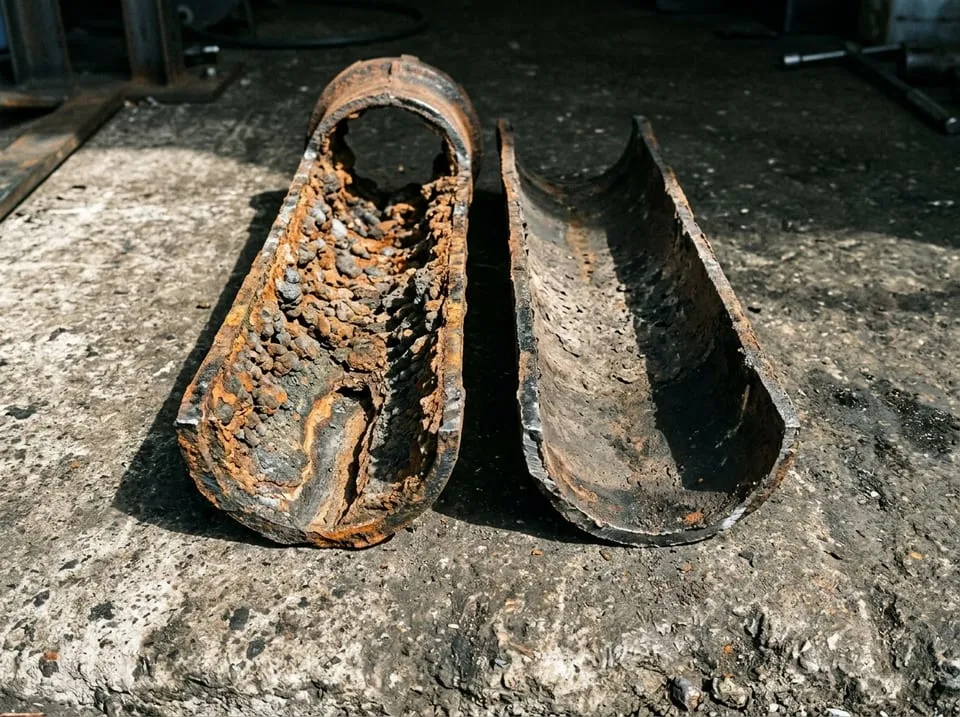
Pompano Beach sits on the material changeover. The U.S. Census Bureau’s American Community Survey 2023 5-Year Estimates, tables B25034 and B25035, give the city 60,046 housing units with a median year built of 1974, of which 67.0% predate 1980 and 37.0% predate 1970: roughly 40,000 pre-1980 units, the third-largest stock in Broward County. PVC became standard in Florida residential construction in the late 1970s, so a 1974 median puts the city’s main building period right across the switch. In Hollywood or Lighthouse Point the year built is close to decisive. Here, two houses on the same Cresthaven street built four years apart can have different drain material entirely.
| Vintage | Likely original drain material |
|---|---|
| Pre-1970 (37.0% of the city) | Cast iron, now 56+ years old |
| 1970–1975 | Usually cast iron, sometimes PVC |
| 1976–1980 | Mixed (this is the changeover) |
| Post-1980 | PVC |
The older core around Old Pompano and Cresthaven is firmly in the cast iron era; parts of Palm Aire and the later western sections are not. Guessing from the neighborhood is unreliable, and guessing from the deed is only slightly better. The Cast Iron Soil Pipe Institute rates cast iron at 50 to 75 years of service, with South Florida practice running 40 to 50 because the ground stays damp and the fill is sandy. A pre-1970 house in Old Pompano is inside that window on either figure. A 1978 house in Leisureville may have nothing to worry about on the material side at all.
A Pompano Beach job runs in this order:
- Clear the line if it is backed up, since a camera cannot see through standing water
- Scope the full run once it flows, recording from the cleanout to the city connection
- Identify the material on the monitor, which settles the cast iron question for that house
- Locate any defect from the surface and mark distance and depth on the lawn
- Hand over the footage and write the quote against the named defect and its position
That sequence is what separates “the house is from 1972” from “there is an offset at 34 feet, five feet down.” The first is a probability. The second is a job that can be priced, bid against by a second contractor, and checked afterward.
What does a sewer camera inspection actually show in a Pompano Beach house?
A sewer camera inspection in a Pompano Beach house shows the pipe material first, which is the one fact the deed cannot supply in a city built across the cast iron to PVC changeover, and then the condition of the run from the cleanout to the city connection: scale and channeling in cast iron, a belly or sag holding standing water, an offset joint, a crack, root intrusion, or groundwater infiltration. The locator on the camera head then gives each finding a distance and a depth, painted on the surface, so a repair can be quoted against a known position.
The defect vocabulary matters because it is what a homeowner should expect to hear. A homeowner on a public plumbing forum, reading his own footage, wrote: “Looks like a sag in the line between 15’ and 34’. Or it may be very flat and needs to be flushed and jetted. I didn’t see any cracks, offsets, or roots. Inside of cast iron pipes look like that and replacing due to rust isn’t a typical reason to replace them unless there’s a visible issue on the outside.” That is the correct standard. Rust and scale on a fifty-year-old line in Old Pompano are the expected appearance of the material and are not a reason to replace anything. A named defect at a marked position is.
| Camera finding | What it means for the repair |
|---|---|
| Scaled cast iron, still round and graded | No repair required; re-scope on a schedule |
| Belly or sag | Standing water; solids drop out; grade cannot be lined out |
| Offset joint | A step that catches material; excavation at that point |
| Crack or fracture | Spot repair or sectional liner if the wall is sound either side |
| Root intrusion | Proves an existing opening at that joint |
| Channeling across sections | Replacement of the run |
The inspection has to happen on a flowing line. A camera pushed into a backed-up pipe sees brown water and nothing else, so the sequence in Pompano Beach is always clear first, scope second. A scope done immediately after a cable clearing also has a limit: the cable opens a hole through a root mass or a grease plug and leaves the rest on the wall, so a heavily fouled line is jetted before the camera pass if the footage is meant to show the pipe rather than what is stuck to it.
Two things come out of the visit. The first is the recorded footage, which belongs to the homeowner and is the document that lets any second plumber check the first. The second is the surface mark, which turns a repair from “somewhere between the house and the street” into a spot on the lawn with a depth beside it. On a Garden Isles or Harbor Village lot, depth is the number that decides how much ground has to be opened to reach the pipe, and a quote written without it is a guess dressed as a price.
Anyone quoting a replacement in Pompano Beach without footage should be asked for it, and anyone quoting from footage that shows only rust should be asked what the defect is. To have a Pompano Beach line scoped and located, request a free quote.
What are the warning signs of a broken sewer line in a Pompano Beach home?
The warning signs of a broken sewer line in a Pompano Beach home are two fixtures affecting each other, such as a tub that fills or gurgles when the toilet flushes or the washer drains; a line that has been cleared more than once in a year; sewer odor at floor level that worsens after heavy rain; a sinking or soft strip in the yard following the line’s route; and drain flies indoors that keep returning. Houses here are slab-on-grade, so the first overflow arrives at the lowest fixture in a finished room rather than in a basement.
The two-fixture sign is the most useful because it locates the problem for free. When flushing a toilet makes a tub gurgle or rise, the restriction sits downstream of both fixtures, which places it in the main line rather than in either drain. A single slow sink with everything else normal is a trap or branch problem and does not need a sewer contractor. Every fixture slow at once, with the lowest drain backing up first, is a main line problem well downstream, and it belongs on camera.
Rain-linked backups are a Pompano Beach signature for a physical reason. A cracked line under a Collier City or Cresthaven street takes on groundwater during a storm, the pipe runs past capacity, and gas is pushed up through slab joints into a hallway. A backup that arrives with weather is strong evidence of a break rather than of grease. The same crack works the other way in dry weather, letting sewage out into the sand, and that is what drain flies breed in and what the sunken strip of lawn over the line means: fill washing into the pipe.
The frequency test is the second free diagnostic:
- Cleared once and quiet for years: it was a blockage
- Cleared twice in a year: there is a defect in the pipe
- Backs up only on heavy laundry loads: a partial restriction, triggered by volume
- Backs up with heavy rain: a break admitting groundwater
- Two fixtures affecting each other: the restriction is in the main line
A line that keeps needing the cable is a line with a fault the cable cannot reach. Repeat clearings without a camera run are a standing appointment rather than a repair, and the second clearing is the moment a camera inspection with a surface locate earns its cost, because it converts a recurring symptom into a named defect at a known distance and depth.
Cast iron adds one more sign on the older side of the city. The Florida failure pattern for iron is thinning along the whole run followed by loss of the pipe bottom where flow is heaviest, channeling, rather than a single clean break. A channeled pipe catches everything that passes, so the symptom is a line in Old Pompano that clears, runs for a few months, and blocks again. Cleaning removes what the trough caught. It does not put the pipe bottom back.
What actually fixes tree roots in a Pompano Beach sewer line for good?
What fixes tree roots in a Pompano Beach sewer line for good is repairing the opening the roots came in through, because roots cannot enter sound pipe: they find a crack or a failed joint that already exists, follow the moisture in, and grow until the line blocks. Cutting them with a cable opens the line for a season. Jetting clears the wall more thoroughly. Neither closes the opening, and the roots return on their own schedule until the joint is sealed, the section is lined, or the run is replaced.
Pompano’s older streets carry mature ficus, live oak and black olive, planted when the neighborhoods went in, and their root systems now reach the laterals under the lawns of Cresthaven and Old Pompano. Finding roots in a Pompano line is finding a failed joint. A homeowner on a public home-maintenance forum, looking at a mass pulled from a toilet drain, had it right in one reply: “Definitely roots. They can only get inside from a break in the pipe. The dirt around the break will smell like death.” That reframes root removal from a cleaning into a repair with a cleaning in front of it.
The sequence that lasts:
- Cable the line to restore flow if it is blocked
- Jet the run to strip the root mass and scale from the wall so the camera can see the pipe
- Scope the flowing line, find the joint or crack the roots entered through, and mark it from the surface
- Repair that point: seal the joint, spot repair the crack, line the section, or replace the run if the pipe is channeled or offset
- Scope again afterward, so the footage shows the opening closed
Whether the fix is trenchless depends on the host pipe. A corroded but round, correctly graded cast iron line can usually be lined once the roots are jetted out, and the liner closes every joint along its length at once. A bellied, offset or collapsed section has to be dug up, because a liner preserves the existing grade and cannot cure across a step. Florida’s Building Code sets the replacement pipe for pipe bursting as HDPE, SDR 17, ASTM F714, with the completed section inspected internally by video camera survey, and PVC DWV to SDR 35 is an approved residential sanitary spec where a trench is the right call.
Where the entry point sits near the street, responsibility has to be established before anyone digs. Work in public right-of-way in Broward County brings a Road Cut and Restoration Permit covering the paved area including signage and striping, and as-builts signed and sealed by a Florida-registered Professional Land Surveyor, with disturbed right-of-way restored at the owner’s or utility’s own expense. Those requirements do not apply to a joint under the lawn, and the quote should say which side of that line the repair falls on.
The Sewer Line Repair Broward field team puts it this way: “In Pompano we scope before we assume. The build year gets you a probability, not an answer.”
Frequently asked questions
Should I replace my cast iron pipes now, or wait until they actually fail?
There is no universal answer, but the two paths are not equal. A planned replacement is scheduled, competitively quoted, and done with dry floors. An emergency one follows a backup and adds remediation. In Florida a third factor applies: carriers examine original plumbing at renewal.
What are the warning signs of a broken sewer line in a Florida home?
Florida homes are slab-on-grade, so the signs differ from basement guidance. Look for a sinking or soft strip in the yard along the line, sewer odor rising through slab joints, drain flies indoors, repeat backups, and a floor area that sounds hollow underfoot.
What does a sewer camera inspection actually show?
It names a defect and locates it. The vocabulary is specific: belly or sag, offset joint, crack, root intrusion, channeling, scale, collapse. A surface locator marks the position and depth on the ground. Rust and scale alone on old cast iron are expected, not a verdict.
Can my sewer line be repaired trenchless, or does it have to be dug up?
Eligibility is decided by the pipe, not the budget. As one plumber put it, you can only do trenchless if the line has correct pitch and is mechanically sound. A bellied, offset or collapsed line cannot be lined. Camera footage settles it before any quote is meaningful.
Should I get more than one quote for a sewer repair?
Yes, on any job over about $5,000. One plumber noted seeing sewer repairs cost $5,000 and $40,000, and one Florida lining job drew quotes of $4,500 and $14,000. Have every bidder quote against the same recorded camera footage so the bids are comparable.
Related services
- Sewer Camera Inspection in Broward CountyWe camera-inspect sewer lines for Broward County homeowners: a recorded run from the cle…
- How Long Do Cast Iron Pipes Last? Service Life in Florida HomesHow long cast iron pipes last depends on the ground. The Cast Iron Soil Pipe Institute p…
- Cast Iron Pipe Replacement in Broward CountyWe replace original cast iron drain lines in Broward County homes with PVC to current Fl…
- Tree Roots in a Sewer Line: What Gets Them Out and Keeps Them OutTree roots cannot penetrate sound sewer pipe. They enter through a crack, a failed joint…
- Sewer Line Repair in Margate, FLSewer line repair in Margate starts with a camera inspection and a surface locate, and y…